I’ve always told landowners that when it comes to getting planning permission, starting early matters.
Today, I’d go further than that.
The planning system has become so slow that waiting for the “right time” to promote your land can itself become one of the biggest risks.
A major outline planning application now takes around two years to determine. Back in 2014, it took about eight months. And that is only the time after an application has been formally accepted by the council.
Before you even get to that starting line, months can disappear in pre-application discussions, validation and getting all the technical work together.
For farmers and landowners thinking about the future of their land, there’s a simple message here: time has become a cost, and the earlier you start, the more control you have over it.
The planning system is taking longer
You might assume planning applications are taking longer because councils are dealing with more of them.
They aren’t.
Research published by Lichfields for the Land Promoters and Developers Federation shows that caseloads have actually fallen over the past decade, while determination times have continued to increase.
The flow of decisions is now only around a third of what it once was.
Put simply, councils are handling fewer applications, making fewer decisions and taking considerably longer to make them.
That matters to anybody with land that has development potential because there is no sign that simply sitting tight will make the process quicker.
The clock doesn’t start when you think it does
When we talk about an application taking two years, there’s another important point to understand.
That two-year period starts after the application has been validated.
There can be a lot of work and waiting before that happens.
Pre-application advice is supposed to help iron out problems before an application goes in. But the research found waits of more than four months for an initial response were common.
In some areas the delays were far worse, including waits beyond nine months in the West Midlands and seventeen months in West Yorkshire. Some councils had suspended their pre-application services altogether.
Then there is validation.
For a medium-sized development site, a council might require around 30 separate assessments before it will accept the application.
So when somebody tells a landowner that getting planning permission is a long game, believe them.
Delay costs money
There is also a big difference between time passing and time passing while somebody is borrowing money.
Take a site capable of delivering 100 homes.
The research gives an example where around £120,000 is borrowed to fund the option agreement and initial costs. At development finance rates of about 1.3% a month, delaying matters by just six months can add nearly £10,000 in interest alone.
That is before paying for another hour of a planner, engineer, ecologist, highways consultant or solicitor.
And planning permission isn’t necessarily the end of it.
Section 106 agreements, which deal with matters such as affordable housing and infrastructure contributions, are now taking an average of one year and five months to complete. On the same example, that can mean another £25,000 to £30,000 in finance costs.
Nobody has necessarily done anything wrong. The scheme does not have to be particularly controversial.
That is simply the cost of spending longer in the planning system.
Why should a landowner care if somebody else is paying?
This is where farmers and landowners sometimes understandably say: That’s the developer’s problem.
But ultimately it isn’t.
A land promoter will normally fund the planning process and carry the risk and costs upfront. That is one of the main reasons for using a promoter in the first place.
But those costs still have to come from somewhere.
Money spent financing an unnecessarily long planning process is money that ultimately affects the economics of the site and the pot available when the land is sold.
And there is another cost which is much harder to calculate.
Uncertainty.
If an application takes two years rather than eight months, that is another two years in which interest rates can change, the housing market can move, planning policy can alter and a council can review its Local Plan.
For somebody promoting dozens of sites, those risks can be spread around.
For a farmer or landowner with one valuable piece of land, they can’t.
Nine years is a long time in anybody’s life
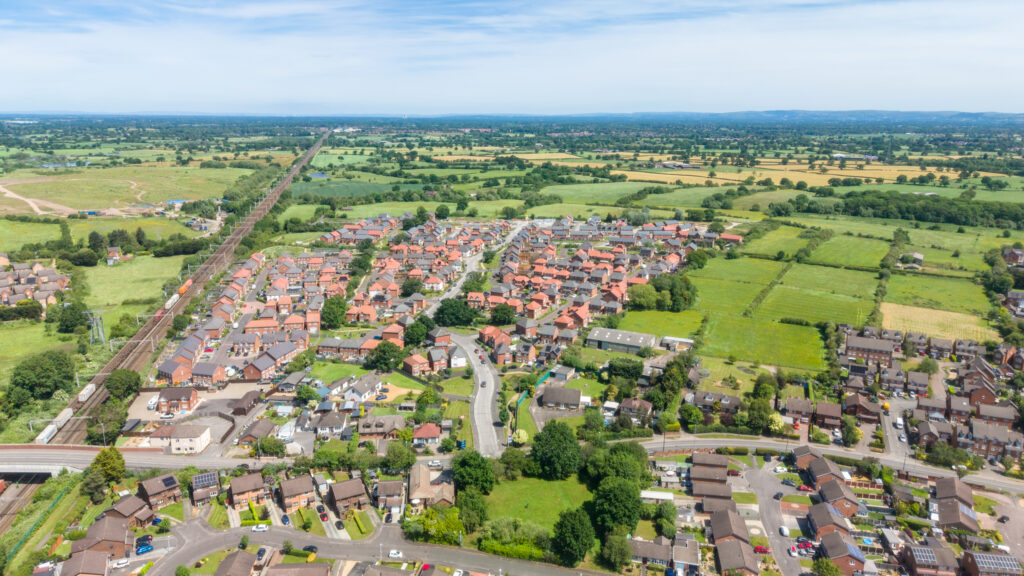
We have seen this ourselves at Crewe Northern Gateway, a site Muller has been promoting since 2012.
When we started, there was no straightforward route to development. The land was outside Crewe’s settlement boundary, it was in several ownerships and there was no planning policy supporting development.
Phase one eventually secured permission for 240 homes in August 2015.
Phase two ran into another problem. The council allowed the statutory deadline to pass without making a decision, which meant the application had to go to appeal.
The Planning Inspector ultimately found that the council had acted unreasonably.
That was the right result.
But getting the right result still took time and money.
Phase one was eventually completed and occupied in 2021 — nine years after promotion began.
People working in the property industry can become used to timescales like that. We deal with planning applications, appeals and Local Plans every day.
A farmer doesn’t.
Nine years can represent a significant chunk of somebody’s working life. Circumstances change. Families change. Retirement plans change.
That is why I always think planning timescales need to be looked at from the landowner’s side of the fence.
Waiting doesn’t remove the risk
None of this means that delay automatically reduces the value of your land.
Markets can improve. Interest rates can fall. A new Local Plan can suddenly make a site more attractive.
The problem is that you don’t know.
The longer your land is caught up in the system, the longer its eventual outcome is exposed to decisions and events over which you have no control.
Some landowners look at that and decide the safest thing is to do nothing.
I think that can be a mistake.
If your land has genuine development potential, not starting the process doesn’t remove the planning risk. It simply moves the whole process further into the future.
So what should landowners do?
My advice is much the same as it has always been: start early and find out what you’ve got.
That doesn’t mean putting in a planning application tomorrow.
It means assessing the land properly, understanding the Local Plan position, identifying the technical problems, looking at competing sites and working out a realistic promotion strategy.
The earlier that work starts, the more opportunity there is to deal with problems before they become expensive ones.
Government is looking at reforms to speed up planning, including a national validation list, changes to the role of statutory consultees, standard wording for Section 106 agreements and greater use of AI to help planning departments deal with consultation responses.
All of that may help.
But if I owned land with development potential, I wouldn’t base my strategy on hoping that the planning system will suddenly become quick.
Cost can be transferred to a promoter. Time can’t.
And in today’s planning system, the only real control a landowner has over time is deciding when to start.
Part Two will look at the planning reforms now being introduced, what they could realistically change and whether landowners should wait for the new system or get moving under the one we’ve got.