Record capital. Structural undersupply. A planning system that blocks most developers. Here’s what it means — and what it takes to get a scheme built.
Last year, UK healthcare property investment hit a record £11.3 billion. That is roughly four and a half times the historic five-year average, driven by landmark portfolio deals and platform-level M&A as North American REITs deployed capital into UK care at extraordinary scale. Welltower alone committed £6.4 billion across Barchester and HC-One.
At the same time, just 77 new care homes opened across the UK in the past year. The sector is building approximately one-third of the beds it actually needs. And 79% of the existing care home estate is more than 20 years old.
That is the tension at the heart of UK care home development in 2026. Capital is abundant, supply is critically constrained, and a planning system defeats most applicants before they deliver a single bed. For operators looking to grow, for landowners with suitable sites, and for funders seeking credible development pipelines, it points to one conclusion. The right development partner — one that carries the planning risk and knows how to bring sites forward — is not a nice-to-have. It is the difference between a scheme that gets built and one that does not.
Capital is flooding in. Sites are the constraint.
The scale of institutional interest in UK care home real estate is no longer niche. Knight Frank’s Active Capital Survey 2026 tracked 119 of the world’s largest real estate investors and $144 billion of capital. It found that 31% were looking to increase or gain exposure to healthcare. Of that group, 68% expected to be net buyers in 2026, and 72% said they would be open to joint ventures and capital partnerships.
Why the returns are attracting global capital
The returns justify it. Average annualised healthcare real estate returns reached 7.7% at the end of Q4 2025, up from 5.8% the year before. We hear the same message in conversations with investors: consistency matters as much as absolute return. The average spread between healthcare capitalisation rates and 30-year gilts is just 0.7%. That gives the sector an almost bond-like quality for long-income investors.
Overseas capital accounted for 74% of 2025 demand. North American REITs dominated, but appetite from the UAE and Australia is growing. One senior housing specialist noted that the UK mirrors the US supply-and-demand dynamic almost exactly, just earlier in the cycle — with the supply gap here even more acute.
“Capital is abundant. The bottleneck is land with planning. That is where the real scarcity sits.”
For operators and funders, this is the critical point. The constraint is not money — it is consented sites. Leumi UK’s £100 million revolving credit facility to LNT Care Developments in June 2026 illustrates the dynamic clearly. It supports five immediate schemes and a further 15–20 care homes over three years, but funder appetite of this scale is conditional on a credible, deliverable pipeline. The bottleneck is land and planning, not capital.
The demand is structural. The supply is not.
The case for care home development does not rest on a market cycle. It rests on demographics.
Demographics that outpace supply
The UK’s over-85 population is set to grow from 1.7 million today to 3.7 million by 2050. Current UK care bed supply stands at approximately 28.5 beds per 100 people aged over 85. In London, that figure drops to around 20. The total bed supply across care homes grew by only 2.4% over the past decade, while the over-65 population increased by approximately 16.2% over the same period. Across the catchments we assess, the same pattern emerges. The homes leaving the market are ageing, converted properties that were never designed for care. The homes in demand are the ones purpose-built for it.
Knight Frank now forecasts that the elderly care market could reach full capacity by 2033 without a material step-change in new development. Current estimates put the UK bed shortfall at close to 40,000 by the end of 2026, rising to 200,000 by 2050. The sector needs to build 14,000–15,000 new beds per year over the coming decade, according to Care England. It is currently delivering closer to 4,000–5,000.
Why the existing stock isn’t the answer
The existing stock is not holding up either. 79% of UK care homes are more than 20 years old. 38% were converted from hotels, residential properties, or offices rather than purpose-built. Around 30% of beds still lack en-suite bathrooms — now widely considered essential for infection control and resident dignity. Nearly one in five homes (19%) is currently rated by the CQC as ‘Requires Improvement’ or ‘Inadequate’.
This is not just a supply gap. It is a replacement demand on top of growth demand. Modern purpose-built facilities are not competing with older homes for the same residents. Instead, they are replacing a deteriorating estate that is exiting the market faster than new supply enters it. Net UK care bed supply grew by just 136 beds in the past year, as a 24% uptick in new home completions was almost entirely offset by closures.
The economics of building well
Meanwhile, the economics of purpose-built development are compelling. Homes registered since 2020 command average personal care fees of £1,611 per week — materially higher than the £1,302 sector average. Occupancy across England stands at 86.1%, with London at 90.6%. Care home prices sold through Christie & Co rose 7.1% on average in 2025, reflecting competitive bidding against limited supply.
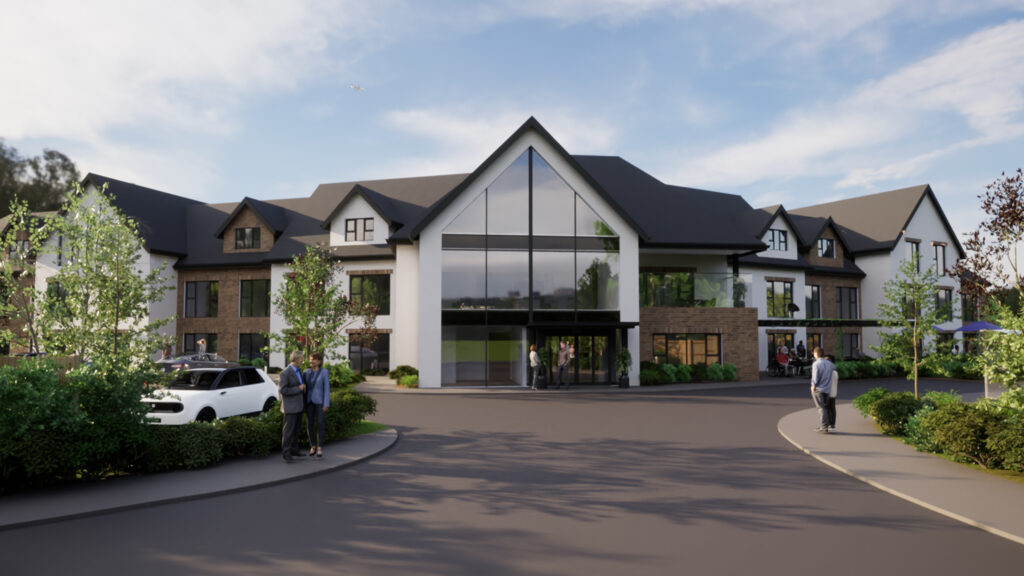
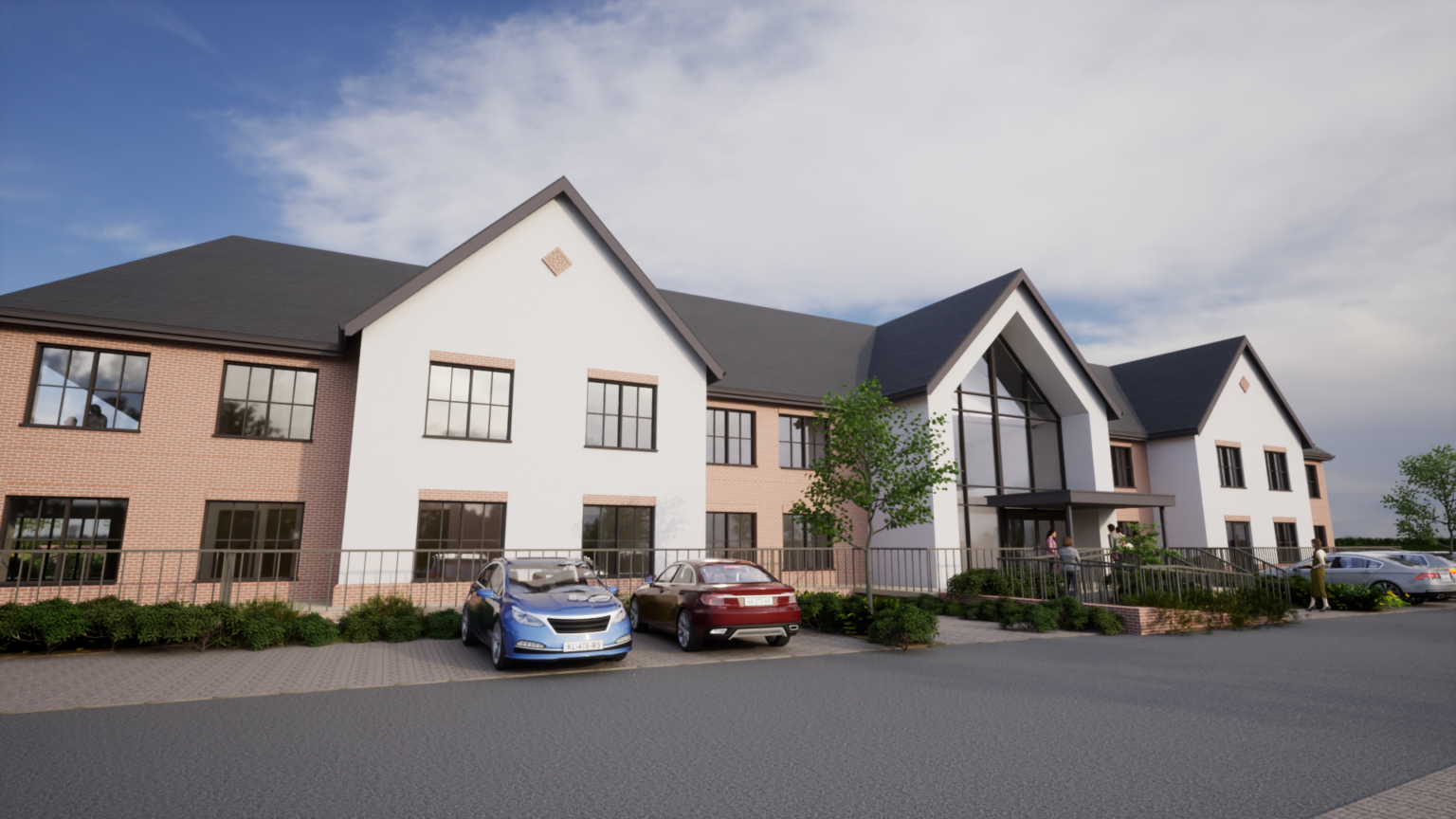
Our Peterborough scheme shows what happens when the right site is identified early and carried through to consent. It is a high-specification, fully consented scheme in an urban catchment with a projected undersupply of 322 market-standard care beds by 2028. The investment case is clear. The challenge is delivery.
Planning is the bottleneck. Most developers cannot get through it.
Here is the statistic that defines the development challenge. ARCO’s June 2026 research found that 89% of successful planning applications for older people’s housing-with-care since 2015 were never built. Non-specialist providers delivered only 28% of the consents they secured, compared to 93% for specialist providers with genuine delivery intent.
Why planning defeats most applicants
Planning for care homes is slow, complex, and uncertain. Securing permission for C2 use class schemes requires planners to understand local need assessments, healthcare infrastructure, CQC registration requirements, and Section 106 obligations. Many local authorities lack defined, proactive policies for older people’s housing, leading to delays and inconsistency. Planning officers often lack familiarity with the distinctions between care homes, housing-with-care, and retirement housing.
The result: the pace of new care home builds lags market demand. That is not because operators do not want to grow. It is because the planning process moves slowly, costs heavily, and defeats most applicants. Developers commit significant capital before they have any guarantee that a project will proceed. For operators or investors without in-house development and planning capability, this is a prohibitive barrier to entry.
A policy tailwind, and proof it works
There is, however, a policy tailwind developing. The UK government’s revised NPPF consultation of December 2025 introduces new policy HO5. It explicitly requires development plans to identify sites for specialist housing for older people where there is an identified need. For sites of 150 homes or more, planning policies must now set out required tenure mixes including specialist older people’s housing. These reforms strengthen the policy basis for promoting care-led sites. But navigating an evolving framework effectively requires planning expertise that most operators and landowners do not hold in-house.
We saw this expertise pay off at Sandy, where we pursued a scheme to appeal after Central Bedfordshire Council’s initial refusal. An independent needs assessment evidencing a 146-bed local shortfall secured outline permission on appeal in July 2025. We do not walk away from well-evidenced schemes because of a first refusal — we build the case that secures consent.
“For operators who cannot easily self-develop, the answer is a specialist partner who carries the planning risk and brings sites forward ready to build.”
What the right development partnership actually looks like
The emerging model in UK care home development follows a consistent structure. A strategic land promoter identifies and acquires a site — greenfield, brownfield, or conversion opportunity. The promoter manages the full planning process: C2 use class application, design development, public consultation, Section 106 negotiation. Once planning is secured, the promoter either sells the site to an operator or funder, or acts as a vehicle of delivery in partnership with an operator who takes on running the home.
A partnership that starts at origination
The critical point is where in that chain the partnership begins. Operators who engage a development partner at site origination — rather than at the point of buying a consented site — gain access to a wider pipeline. They also influence design and specification from the start, and share the risk management across a much longer runway.
At Stafford, we agreed terms with the landowner in late 2019. That gave us the runway to bring an operator in at design stage and deliver a scheme built around their brief, rather than retrofitted around it.
A care home designed with operator input from the outset is easier to run, easier to staff, and more attractive to CQC. It also tends to be easier to approve. The case for need and the quality of design are developed together, not bolted onto each other late in the process.
Our track record
At Müller Property Group, this is precisely how we work. We identify suitable land across England and Wales and manage every stage of the planning process, from first assessment through to a consented, delivery-ready site. Planning risk sits with us throughout, alongside design development, public consultation, and stakeholder engagement. Our 97% planning success rate across more than 20 years reflects what happens when planning is treated as a specialism rather than an obstacle.
Our current care pipeline includes over 2,800 beds. Since January 2025 alone, we have secured four planning approvals representing 310 new care beds. We have also completed seven new care home site acquisitions representing a further 507 beds. Recent submissions include a 68-bed care home in Buckingham and a 70-bed care home in Andover, alongside schemes in Peterborough and Middleton, Greater Manchester. At Middleton, we completed the site and sold it to North Bay Developments as a delivery partner for a new care and residential scheme.
We work with care home operators, funders, and investors as genuine development partners — not simply as land sellers. If you are an operator looking to build your pipeline of new homes, we want to understand your location and bed-type requirements. We work to bring forward sites that match them. If you are a funder or investor seeking a credible development pipeline backed by planning expertise, we can offer that too.
Own land? This is what the market means for you.
For landowners with sites that could be suitable for care home development, the conditions in 2026 are exceptional. Operators are actively seeking new development sites. Capital is seeking consented pipelines. And the planning reforms underway are strengthening the policy basis for care-led proposals.
Sites that work best
The strongest care home sites typically span between one and five acres. They tend to sit within or adjacent to established communities, with good access to amenities and transport. Former care homes, hotels, large residential plots, and out-of-town commercial or retail sites all feature in the development pipeline. Greenfield land on the edge of settlements can also work well, particularly in areas of identified need.
How the promotion agreement works
Müller Property Group works with landowners through a promotion agreement model. We fund and manage the full planning process — site appraisal, design, application, and negotiation. Landowners receive an agreed share of the uplift in land value once we secure consent and sell the site. You do not need to fund the process, navigate planning alone, or find a buyer yourself. We carry the risk; you share the reward.
Our team is actively seeking new sites across England and Wales. If you think your land could be suitable — or if you are simply not sure — a conversation costs nothing and a site appraisal is free.
The market has the capital. It has the operators. It has the demographic need. What it still lacks is delivery.
That is the role Müller Property Group has built its business around.
Get in touch
Whether you’re a care home operator, funder, or investor looking to grow your pipeline, or a landowner with a site to discuss, we’d like to hear from you.
Sources: Knight Frank Healthcare Capital Markets 2026; Knight Frank Healthcare Development Opportunities Report 2026; Knight Frank UK Care Homes Trading Performance Review 2025; ARCO, A Wasted Opportunity (June 2026); Christie & Co Business Outlook 2026; Care England; Carterwood 2025 Self-Funded Fee and Trading Performance Review; LaingBuisson; DHSC; ARCO/Carterwood. Müller Property Group pipeline data correct as of September 2025.