Something has shifted in the care market. Not the demand — that remains strong, and the structural case for new provision is as compelling as it has ever been. What has changed is what it now takes to turn a promising site into a scheme that gets funded, consented and built.
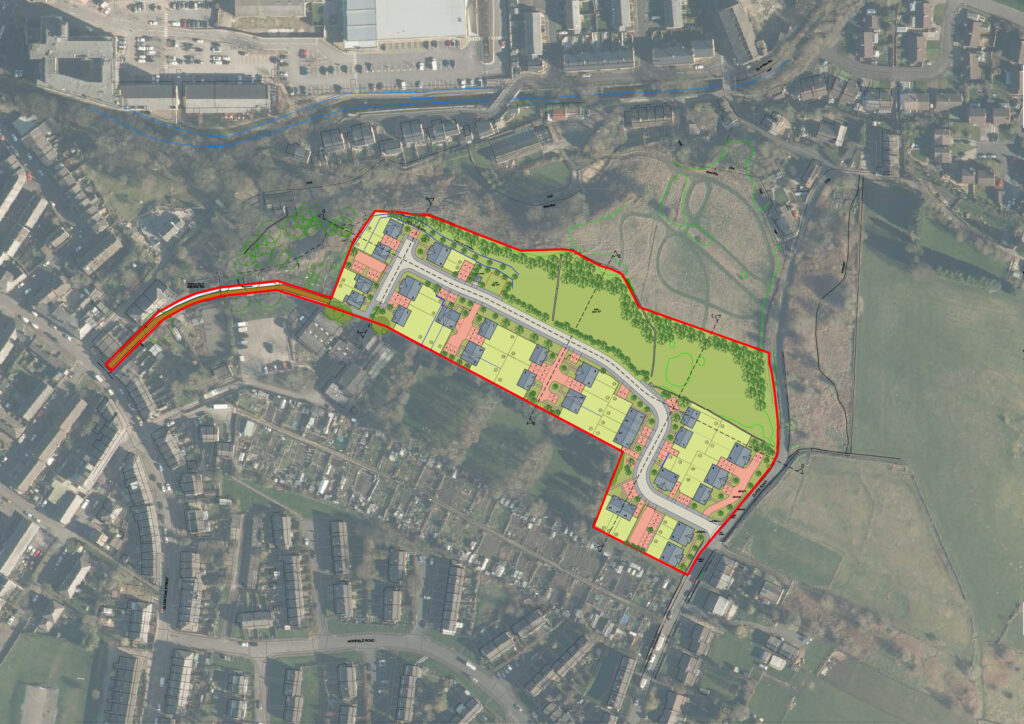
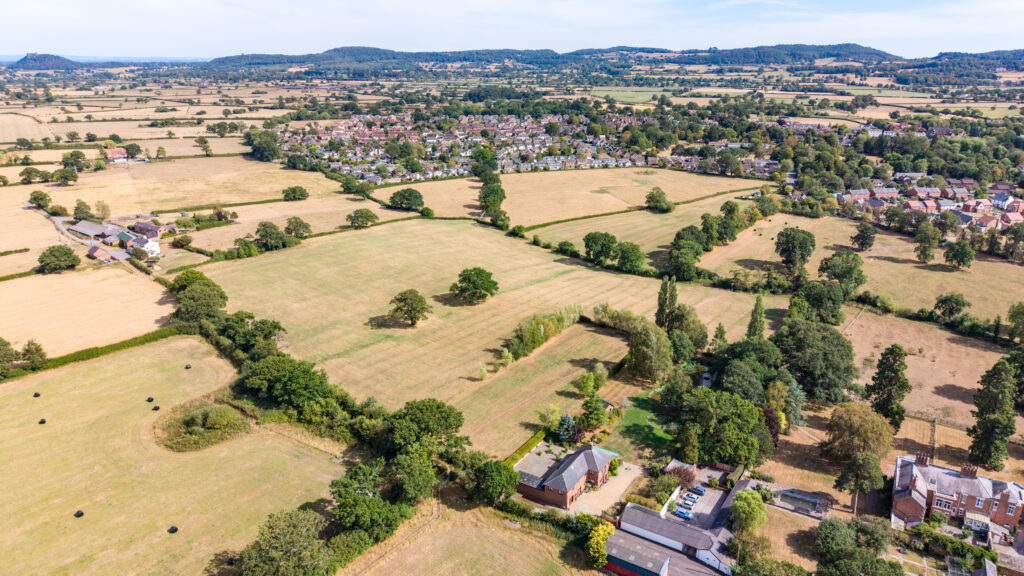
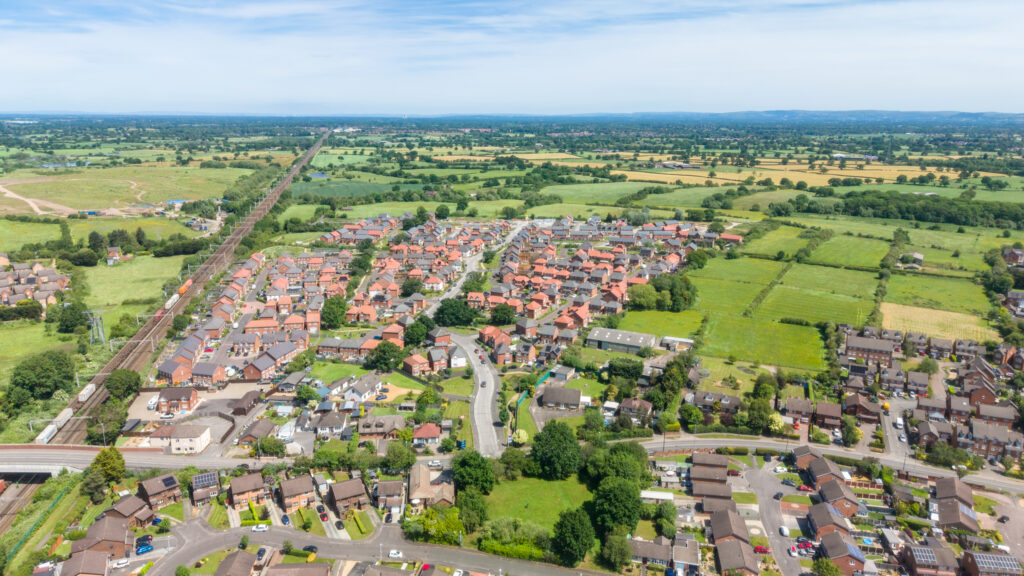
For most landowners, care home development isn’t an obvious consideration. But the land that suits it is more common than people assume: a site of an acre or more, within or adjoining an established settlement, with reasonable access and no fundamental planning barrier. If that description fits land you own, the commercial case for care is worth understanding — because in the right hands, that land may be significantly more valuable than you realise.
The gap between land with potential and land that can support a genuinely deliverable care scheme has grown. And that gap is increasingly shaping what land is worth.
A Market Raising its Standards
The elderly care sector has spent much of the past decade developing the granular market intelligence, demographic forecasting and operational benchmarking needed to support planning decisions and investment. It was driven by pressure from planners, commissioners and investors who needed more than headline demand figures before they would commit.
The result is a market that now sets a high evidential bar — and applies it consistently. Carterwood’s May 2026 round table identifies the same trajectory playing out across the wider specialist care property market: investors and providers placing growing emphasis on local market evidence, demonstrable deliverability and operational credibility.
As Carterwood co-founder Ben Hartley put it:
“The market fundamentals remain compelling, but the bar has risen. Providers need to be able to evidence not only demand, but also delivery, outcomes and value. Those with strong data, clear local positioning and demonstrable quality will be best placed to capture the opportunity ahead.”
For landowners, that shift has a direct commercial implication. The right site, with the right expertise behind it, may be more valuable than it has ever been. A poorly evidenced approach, without the right advice, will not gain traction in a market that has raised its standards.
The question is no longer whether demand exists. It is whether a site can meet the standards investors, operators and planners now expect — and whether the team behind it can prove it.
What Makes a Strong Care Home Development Site?
Not every piece of land will support a care home. When Muller assesses a site, we start with a single question: can care here genuinely be delivered?
The core tests are practical. Scale: is there realistically room for 60 beds or more, once access, parking and outdoor space are factored in? That usually means at least one acre, and often 1.25 to 1.5 acres for a standard scheme. Catchment: does the local area show a clear shortfall in modern care beds, based on independent demographic data? Access and context: can staff, residents and visitors reach the site easily, and does it sit naturally within or on the edge of an existing community? Planning route: do national and local policies provide a credible pathway to care use? Buildability: are there hidden constraints — ground conditions, contamination, neighbouring uses or heritage designations — that could prevent a consent from ever becoming a real building?
If those fundamentals are in place, the next question is how to build the strongest possible case. That comes down to three things: robust evidence, high-quality design and a planning strategy matched to the specific characteristics of the site.
Why Design Is the Entry Requirement
Design quality now influences every stage of a care scheme’s journey — from planning approval and operator interest through to funding decisions and long-term performance.
The shift has been building for more than a decade. The Housing our Ageing Population: Panel for Innovation (HAPPI) report, commissioned in 2009, challenged the institutional model that had shaped much of the UK’s existing care stock: corridors designed around operational convenience rather than resident experience, communal areas with little connection to daylight or outdoor space, buildings that felt more like facilities than homes. HAPPI reframed the debate. The question became not whether a scheme met minimum standards, but whether it was somewhere people would genuinely choose to live.
The evidence base has strengthened since. The University of Stirling’s Dementia Services Development Centre has spent more than three decades researching how the built environment affects people living with dementia. Lighting levels, colour contrast, sightlines and wayfinding all have a measurable impact on a resident’s independence, orientation and wellbeing. Under CQC’s Regulation 15 and Safe Environments quality statements, the fabric of a care home now forms part of the framework against which services are assessed throughout their operational life. For serious operators, design is a core element of quality, safety and risk management — not a discretionary upgrade.
The commercial implications follow directly. Institutional investors and experienced operators are not looking for the minimum viable building. Dementia-friendly layouts, en-suite wetroom bedrooms, strong amenity provision and secure outdoor space are no longer differentiators — they are the baseline for schemes the market will back. A well-designed care home is easier to approve, easier to fund and easier to operate.
Muller Property Group’s Stafford scheme illustrates what that baseline looks like in practice. The 75-bed consent combined dementia-friendly design throughout with en-suite wetrooms in every bedroom and a comprehensive amenity offer — a specification capable of attracting operators and institutional funding from day one.
Evidence Wins Care Home Consents
National demand for care beds is well established. Yet what makes a consent credible is local evidence.
Planning inspectors don’t weigh broad national statistics. They weigh what’s happening in a specific area: a documented shortfall of beds within a defined catchment, a growing elderly population and the absence of modern provision nearby. Local authorities are formally required to assess and plan for the care needs of their ageing populations — a requirement set out in national planning policy in December 2023 and strengthened by the December 2024 update. In practice, most have fallen short of what the framework envisages. A credible, independently produced Care Home Needs Assessment steps into that gap, and in planning terms, that carries real weight.
Hard evidence and local objections don’t sit on equal footing. An independently assessed shortfall, specific to a catchment, quantified and projected forward, creates a foundation against which concerns about traffic, character or visual impact must be weighed. Local evidence establishes the case for this scheme, on this site, in this community — and where need is clearly demonstrated, it becomes the argument itself, not a supporting document.
The London Road scheme in Sandy, Bedfordshire shows how far that can carry a case. Central Bedfordshire Council refused the application on the basis that the site’s separation from the town by the A1 dual carriageway would leave residents and staff car dependent. What the refusal didn’t address was the more pressing reality: a projected shortfall of 146 care home bed spaces in the area by 2030. Muller appealed, led with that evidence, and the Inspector granted outline consent for the 80-bed scheme in July 2025 — concluding the transport concerns didn’t stack up, and that the scheme’s contribution to meeting a demonstrable local need was a significant benefit in its own right.
The Opportunity Ahead
The care market has not become less attractive. It has become more selective.
Demand remains strong, funding remains available. Operators continue to seek well-located, well-consented development opportunities. The landowners best placed to benefit from rising care home land value are those who can bring forward a site where local need is proven, design is serious, and consent is clean: a proposition the market can act upon with confidence rather than one it has to take on faith.
Muller backs schemes with its own capital, takes sites through the full planning process and resolves all matters before considering a scheme complete. Throughout our care home development pipeline, the pattern is consistent: schemes with clear local need, clean planning positions and committed operators are the ones that attract institutional capital and proceed to delivery. The Peterborough scheme reflects that directly — full planning permission for an 80-bed care home secured, an experienced operator committed, a construction partner appointed, and institutional funding following the consent.
Recent schemes, such as our submitted care home in Ash, Surrey, show how targeted that case for need can be: the scheme is designed specifically to address a projected shortfall of 312 en-suite wetroom beds across the Borough of Guildford by 2030.
In a market that now prices certainty directly, the interests of landowners and ours are genuinely aligned.
If you own land of one acre or more, within or adjoining an established settlement and are considering care home development, we offer an initial assessment at no cost and no obligation. We’ll tell you honestly whether the fundamentals stack up, what challenges may need to be overcome, and what a realistic route to consent could look like.
To discuss your land’s potential, contact Muller Property Group’s land team or submit your details for a free site appraisal.